
Barnabas regularly presents his research at academic conferences and workshops around the world.
You can read about some of the latest presentations below.
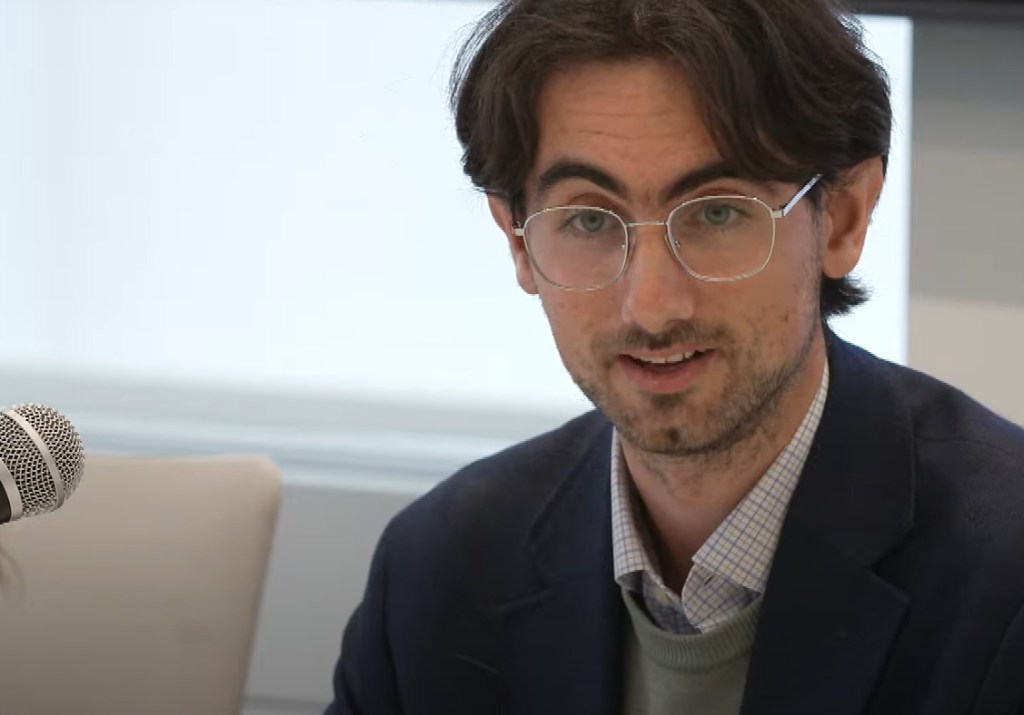
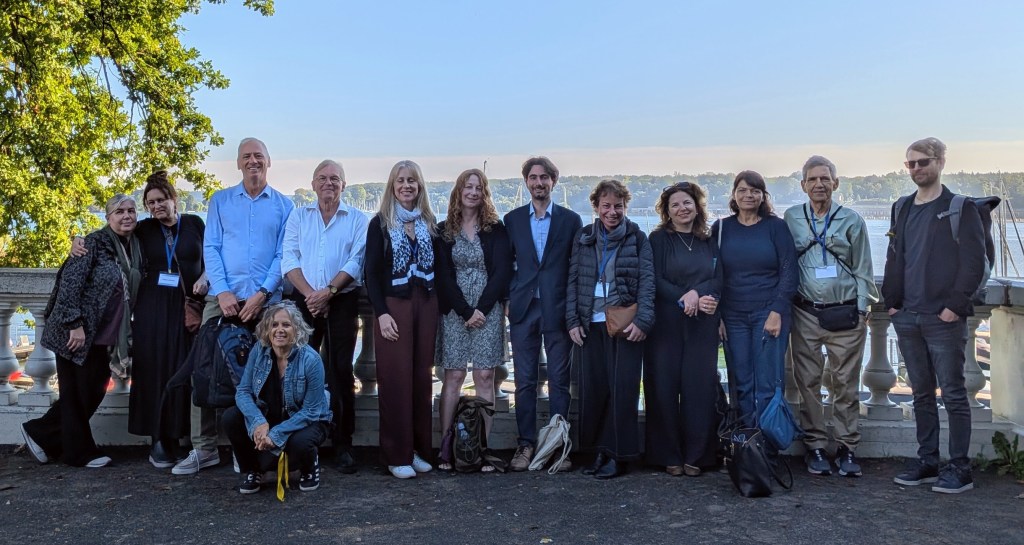
The Yad Vashem Diana and Eli Zborowski Center for the Study of the Aftermath of the Holocaust and the House of the Wannsee Conference, Wannsee, 10-11 September 2025
Focused on Holocaust Survivor “Diasporas”, this research workshop explored the arrival of survivors to Jewish communities and their involvement in the rebuilding, creation, or expansion of these communities after the Second World War.
The workshop was organised by the Yad Vashem Diana and Eli Zborowski Center for the Study of the Aftermath of the Holocaust and hosted at the House of the Wannsee Conference outside Berlin.
‘I certainly didn’t feel I was Hungarian, I was a stinking bloody Jew’: Finding Belonging in Post-War Hungary
With these words, Holocaust survivor Nandor Fenjo explained why he joined the Zionist youth movement in Hungary after the Second World War. This paper explored how returning survivors in Hungary made the difficult choices on who to identify with and where to rebuild their lives, paying particular attention to the rise in popularity of the Zionist youth movements.
British and Irish Association of Holocaust Studies, University of Kent, 3-4 July 2025
The annual conference of the British and Irish Association of Holocaust Studies, hosted in 2025 at the University of Kent by Dr Jo Pettitt.
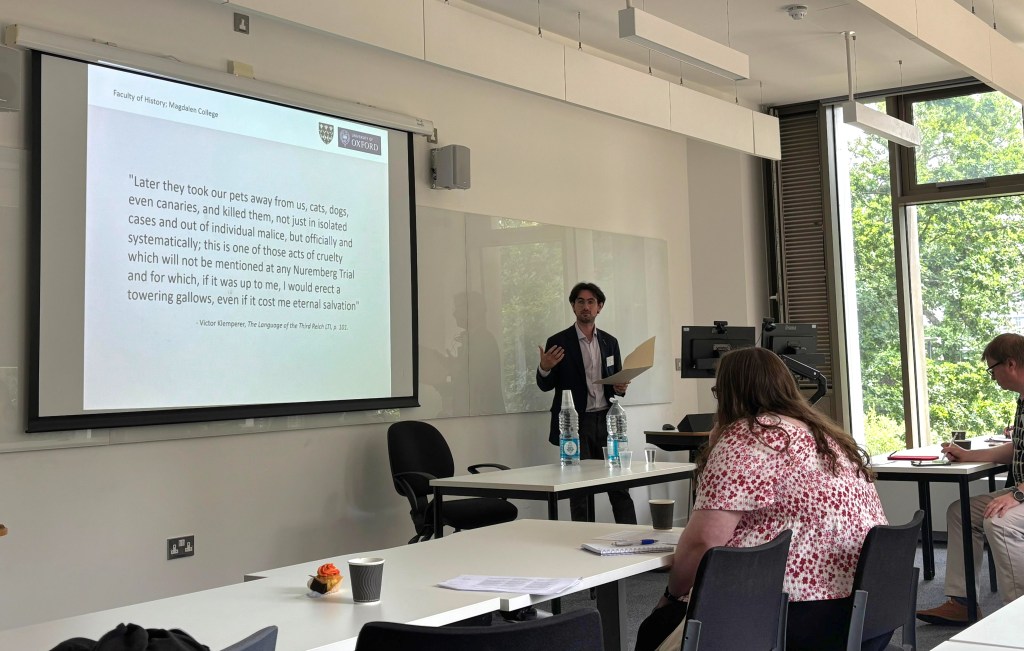
‘The system of animal experiments was mainly a Jewish affair’: Animals and Animal Rights Discourse as a Tool for Persecution During the Holocaust
This paper outlines how animals were weaponized by perpetrator regimes across Europe to target victims during the Second World War. It identifies the actors who promoted anti-Jewish measures though animal welfare campaigns and reveals how their work included legal measures, regulation, and propaganda. As a result, it shows how animals were used to bring about and accentuate Jewish suffering.
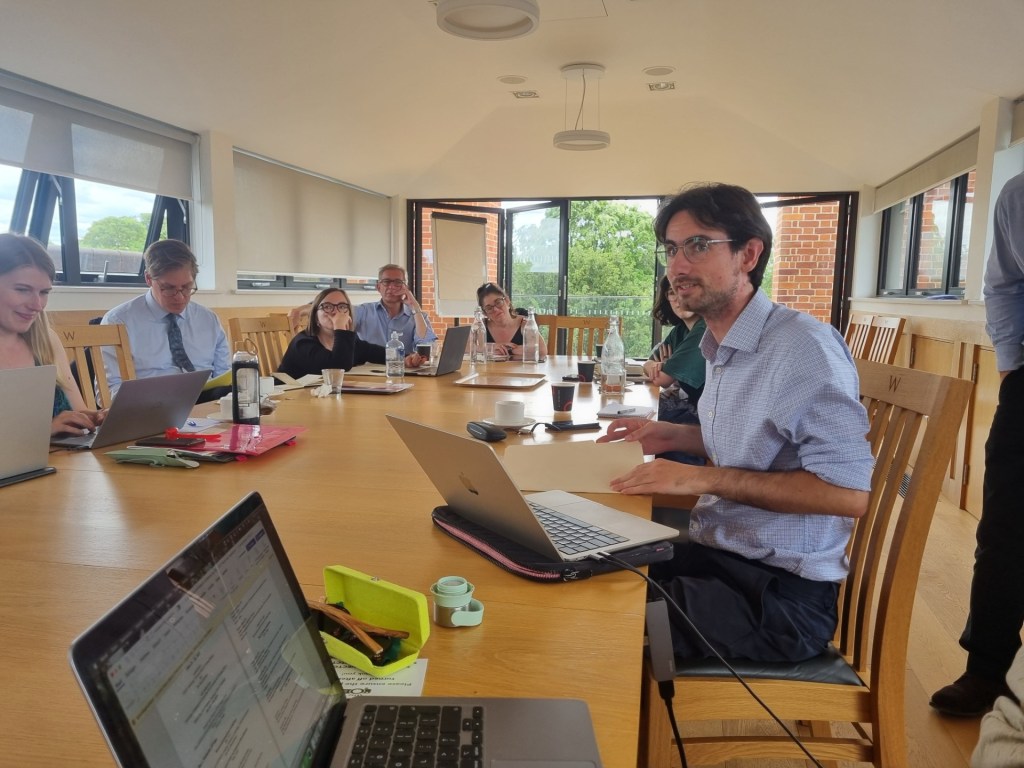
Materiality and Precarity: Preserving Holocaust Memorial Sites, University of Cambridge, 25-26 June 2025
Organised by Jonathan Marrow and Beatrice Leeming, this workshop explored Holocaust Memorial sites, focusing on their historic significance, affective potential, and future service.
This workshop was sponsored by the DAAD Cambridge: Research Hub for German Studies and The Woolf Institute with funding from the Cambridge Committee for Central and East European and Eurasian Studies.
Memorializing an Alleged Gas Chamber: Bricks from the Site of the Kőszeg Brick Factory
This paper explores how questions of authenticity and memorialization of the Kőszeg massacre have been transmitted through the materiality of bricks from the Kőszeg brick factory. It focuses on two collections of bricks which were donated to the United States Holocaust Memorial Museum in 2017.
Women in the Holocaust: International Study Center, 19 June 2025
Reflections on the Fate of Hungarian Women in the Holocaust: 81 Years Since the Mass Deportation of Hungarian Jewry
Moderator: Prof. Zamir Lily, Academic Director & Co-founder of WHISC
Panelists: Prof. Rosen Ilana (Ben Gurion University of the Negev), Barnabas Balint (University of Oxford), Ms. Szabo Alexandra (Brandeis University)
The Women of Allendorf: Tracing Hungarian Jewish Women Deported to the Concentration Camps
The women of Allendorf represent a powerful chapter in the history of Hungarian Jewry during the Holocaust. Deported from their homes, these women were forced into labor and endured inhumane conditions in Nazi concentration camps. Tracing their journeys offers insight into their daily struggles, acts of solidarity, and the enduring spirit that helped many survive. Their stories, long overlooked, shed light on gendered experiences of persecution and resilience in the face of unimaginable horror.

Centre for Jewish Studies at the University of Leeds, 18 June 2025
Writing a History of Animals During the Holocaust
Join us for a talk with Barnabas Balint, Research Fellow at the Jack, Joseph and Morton Mandel Center for Advanced Holocaust Studies at the United States Holocaust Memorial Museum.
Animals are hardly ever the focus of Holocaust history, but they do appear throughout its sources. This talk identifies the sources and methodology for writing a history of animals during the Holocaust. It reveals how animals were used as a tool for social exclusion, as perpetrators used laws, regulations, and propaganda about Jews’ treatment of animals to construct an antisemitic ‘other’ and further their policies of persecution. It argues that this history can be accessed through multiple themes, as animals appear as tools of persecution, through elements of the human experience, and in points of memory.
More details here.
Western Galilee College, Israel, 16 June 2025
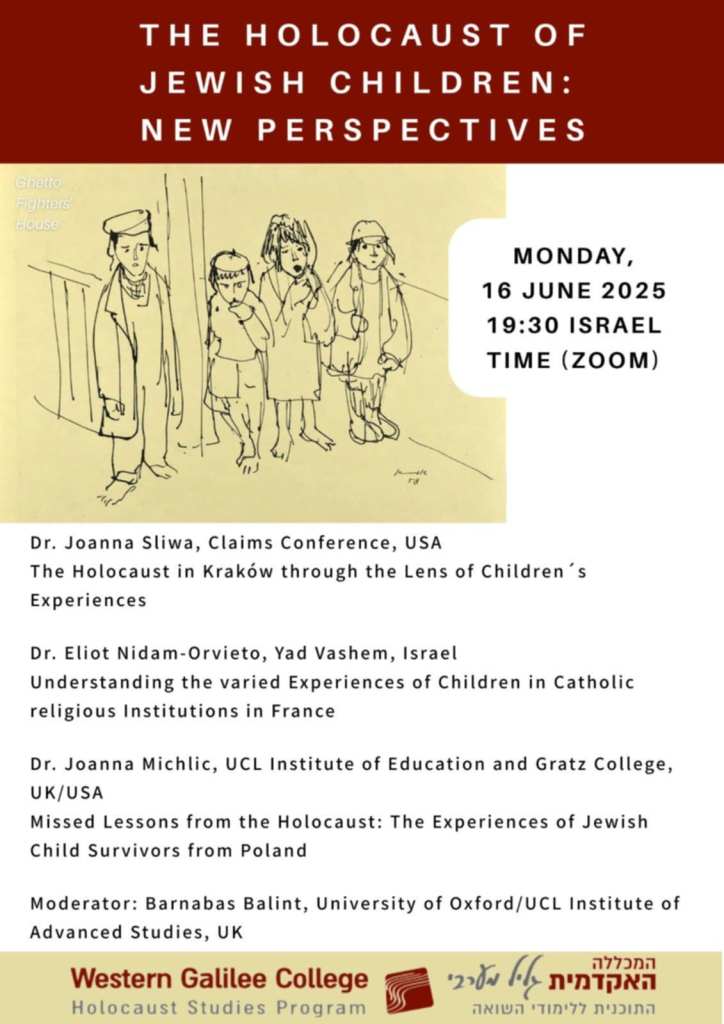
The Holocaust of Jewish Children: New Perspectives
I moderated a panel discussion exploring new perspectives on the history of children during the Holocaust, hosted by Western Galilee College. Speakers included: Dr Joanna Sliwa (Claims Conference, USA), Dr Eliot Nidam-Orvieto (Yad Vashem, Israel), and Dr Joanna Michlic (UCL Institute of Education and Gratz College, UK/USA).
The Role of Auschwitz in Holocaust Narratives, The Azrieli Foundation, 5 May 2025, Toronto
Comparing the Representation of Auschwitz in Memoirs and Interviews from Hungarian Holocaust Survivors
This paper compares how three Hungarian Jewish women represented the Auschwitz-Birkenau extermination camp in their memoirs for the Azrieli Foundation and in their interviews with the USC Shoah Foundation. It identifies the similarities and differences in how they narrated the camp and their experiences of it, drawing attention to the specificities of each genre.
Building on recent research on Holocaust memory by Lawrence Langer and Holocaust history by Debórah Dwork, I suggest that we need to be aware of how memories are co-created and how the intangible and uncontrollable impacts their production.
Watch the whole conference and a clip from my presentation below.
Western Galilee College, Israel, 27 March 2025
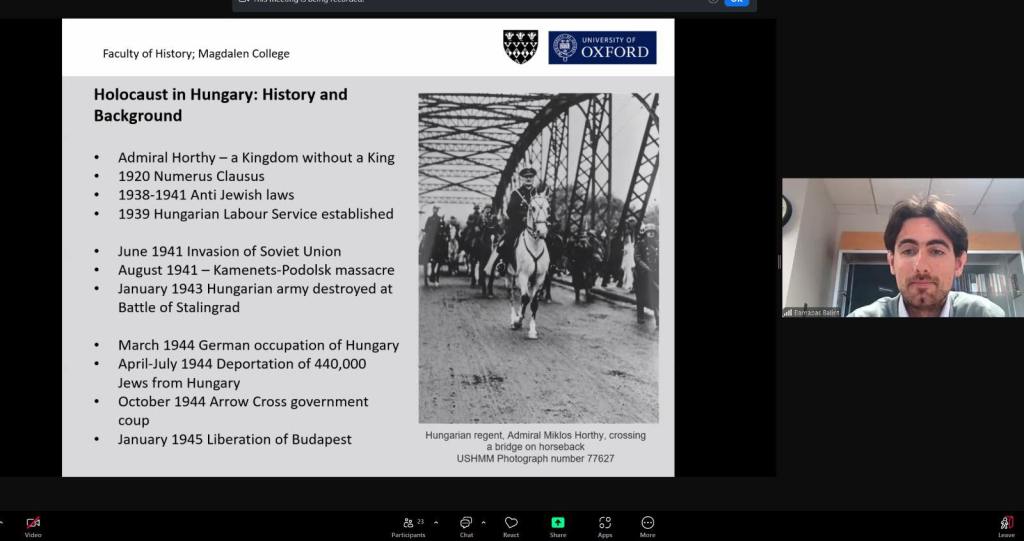
Zionist resistance to the Holocaust in Hungary
In this guest lecture, I gave general background on the Holocaust in Hungary and shared my research on Zionist-led resistance. In particular, I focused on the rescue and smuggling efforts of the Zionist youth movements across the Hungarian borders.
Local Relief and Rescue Operations on the Margins of the Holocaust, United States Holocaust Memorial Museum, 19-30 August 2024
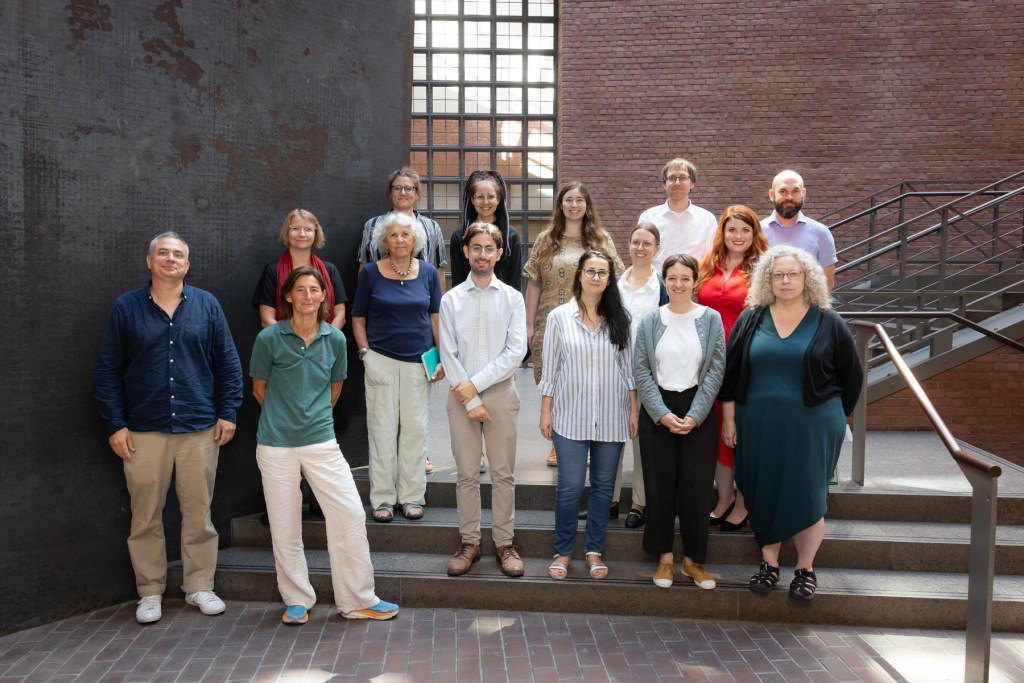
2024 Jacob and Yetta Gelman International Research Workshop: “From the Atlantic to the Black Sea: Local Relief and Rescue Operations on the Margins of the Holocaust”, co-hosted by the Mandel Center, Gaëlle Fisher, Bielefeld University, and Sebastian Musch, University of Osnabrück.
This workshop advances research on rescue and relief in World War II by foregrounding smaller local actors and organizations, particularly in locations on the perimeters of the main theaters of the Holocaust and on the peripheries of power.
Reconceptualizing Resistance: Zionist Networks of Rescue and Resistance in Wartime Hungary
This project explores the role played by the Hungarian Zionist Association (Magyarországi Cionista Szövetség, MCSz) in resistance and rescue during the Holocaust in Hungary. In so doing, it reconceptualises resistance around pre-existing personal solidarities as opposed to political and national ideologies.
 Dr Barnabas Balint