
Barnabas Balint has organised multiple national and international workshops and conferences, winning funding from prestigious foundations and institutions. Many of these events have resulted in internationally-recognized publications.
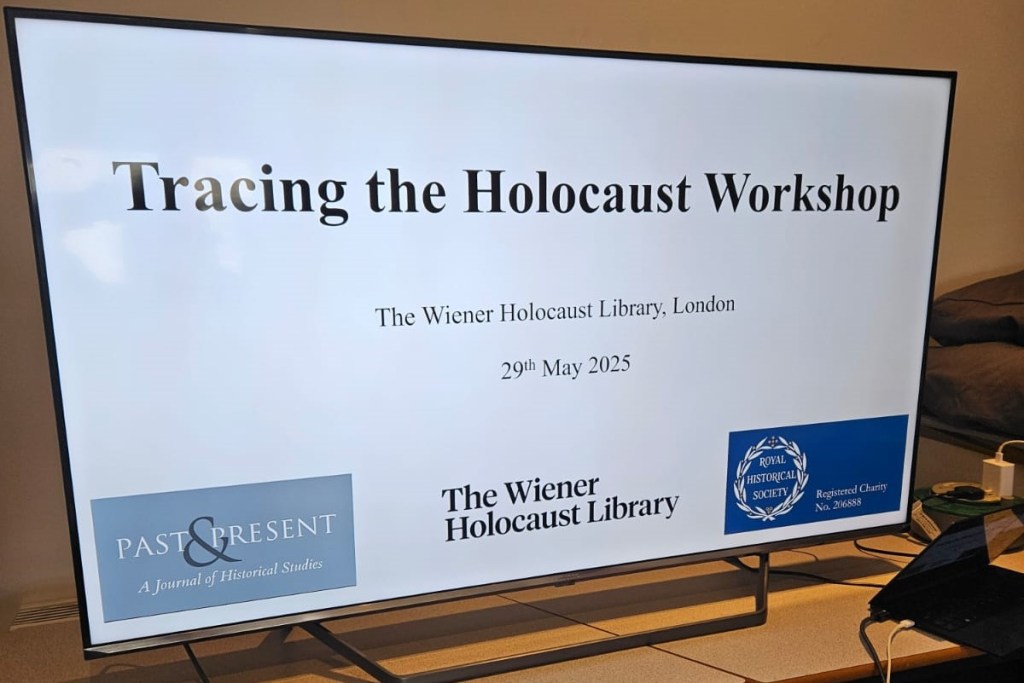
Tracing the Holocaust, Wiener Holocaust Library, 29 May 2025
At the close of the Second World War, millions of people were displaced across multiple continents. Parents, children, and siblings searched for their missing relatives. Thus began decades of tracing. Many of these searches were carried out by the International Tracing Service (ITS), which gathered and generated millions of pages of documentation. These documents now make up the ITS Archive, accessible at the Arolsen Archives in Germany and digitally in sites around the world.
In this one-day workshop, hosted at the Wiener Holocaust Library, we bring together PhD candidates and early career researchers to reflect on their uses of the archive in new research. The workshop focuses on tracing individuals persecuted under the Nazi regime, reflecting on the process and results of tracing both in the past and by researchers today. We will discuss some of the latest approaches to researching tracing and connect researchers with key resources held by the Wiener Holocaust Library, especially highlighting the potential of the ITS Archive.
Funded by the Royal Historical Society and the Past & Present Society.
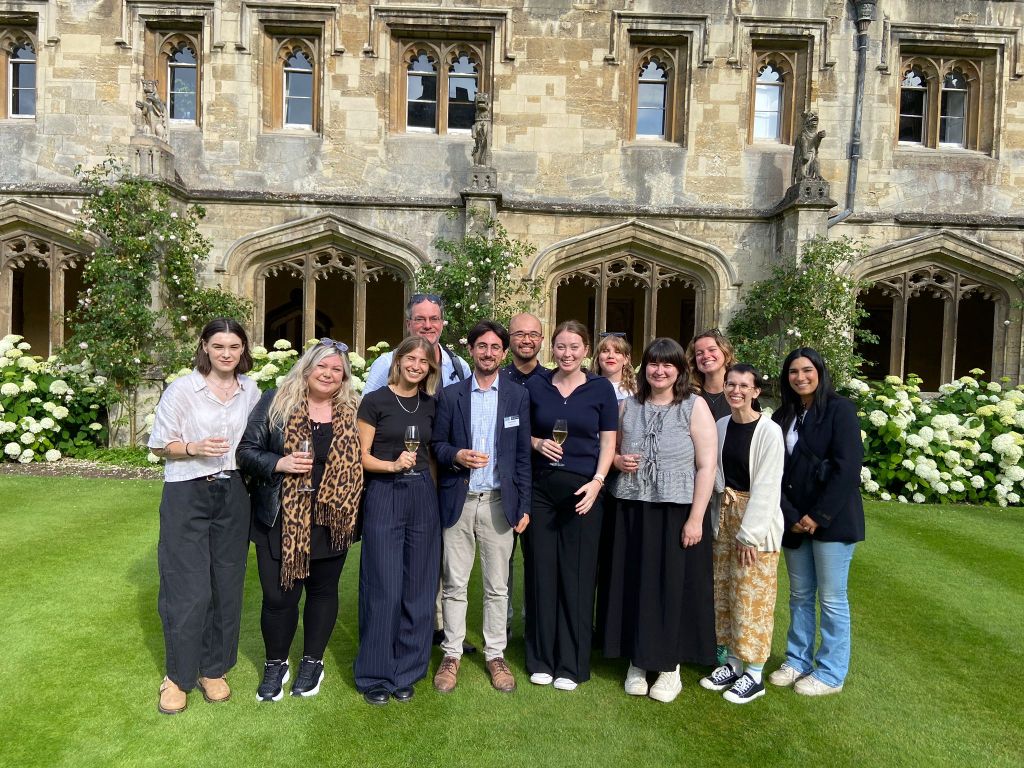
Animals and the Holocaust, Magdalen College, University of Oxford, 11-12 July 2024
This two-day workshop at the University of Oxford invites researchers and practitioners from all career stages to reflect on the topic of animals and the Holocaust. While there has been no significant and compelling account of animals during the Holocaust, many researchers recall finding traces of animals in their archival work. From family pets who were abandoned or given up because of persecution, to the guard dogs that attacked Jews in ghettos and camps, to the livestock and wild animals that Jews encountered on their journeys, and documents that were damaged by animal activity, animals intersect with Holocaust history in several places. Furthermore, antisemitic tropes in propaganda often employed animal imagery and are repurposed in works like Maus by Art Spiegelman and other various media about the Holocaust.
This workshop approaches the history of animals and the Holocaust from a broad perspective. Its goals are tripartite: first, to build a methodological approach for including animals in historical research and writing about the Holocaust and mass violence; second, to highlight important examples from archives; finally, to explore how writing the history of animals during the Holocaust adds to our understanding of victimhood and Nazi persecution to develop a deeper social history of this period.
Funded by Magdalen College Oxford, the German History Society, the Social History Society, and the Oxford Research Center for the Humanities.
Papers from this workshop are currently in review for a special issue of Patterns of Prejudice.
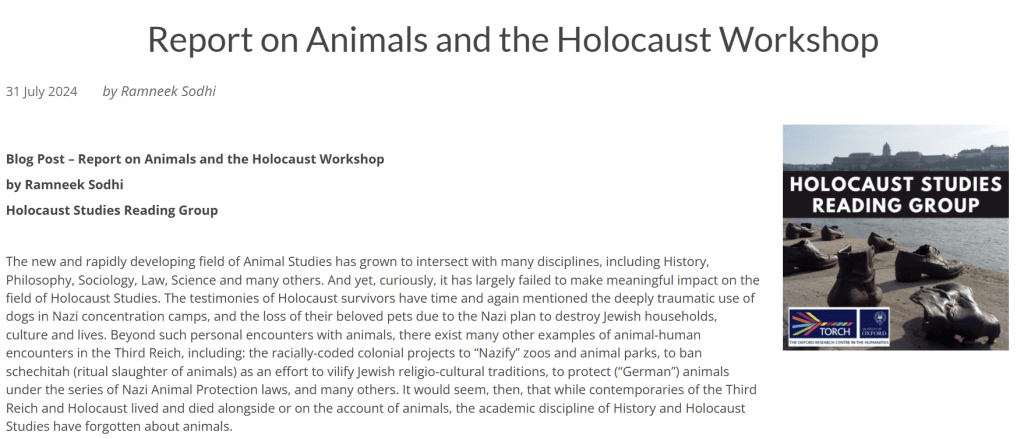
Read more about the conference on the TORCH, Social History Society, and German History Society websites below.
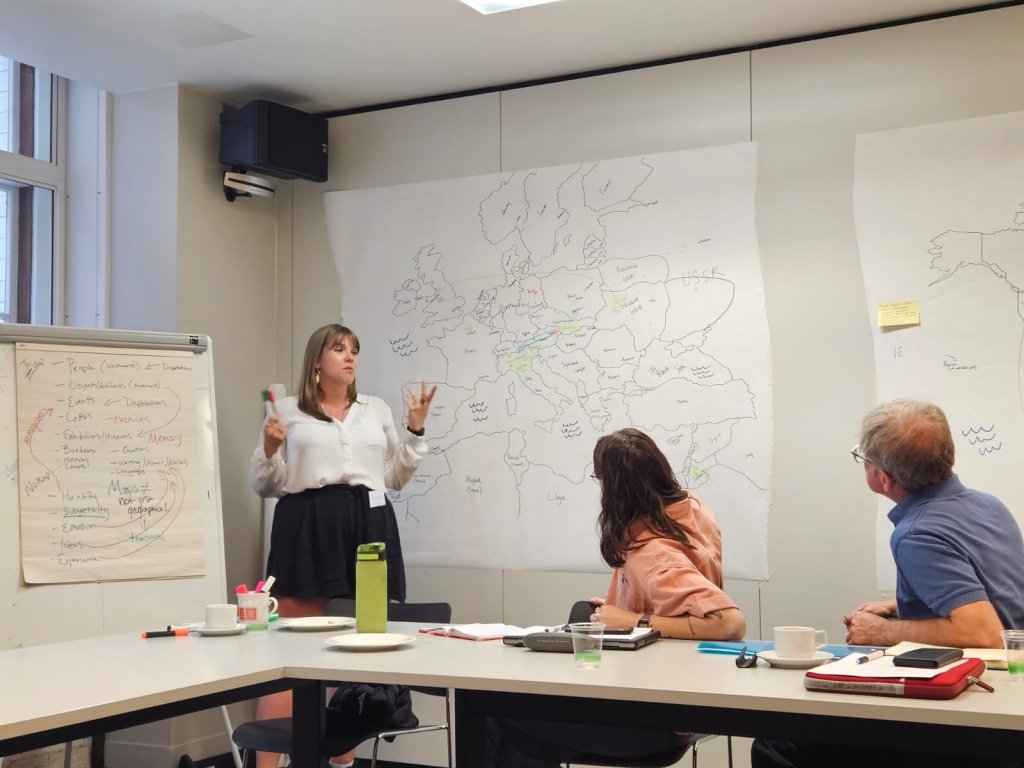
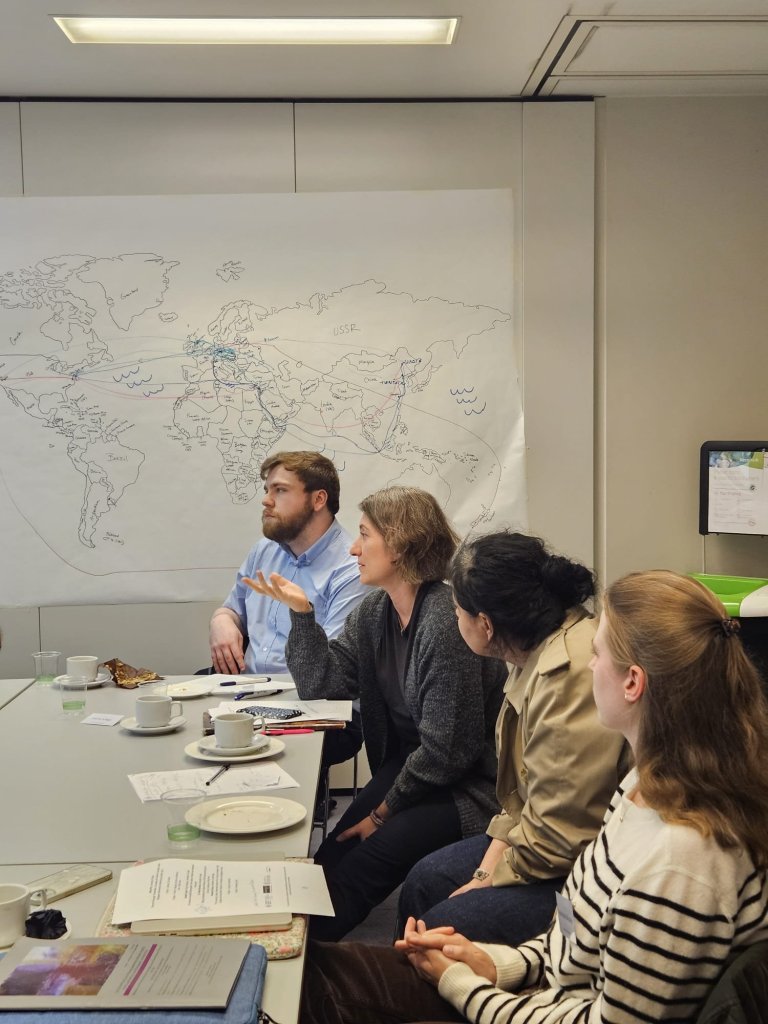
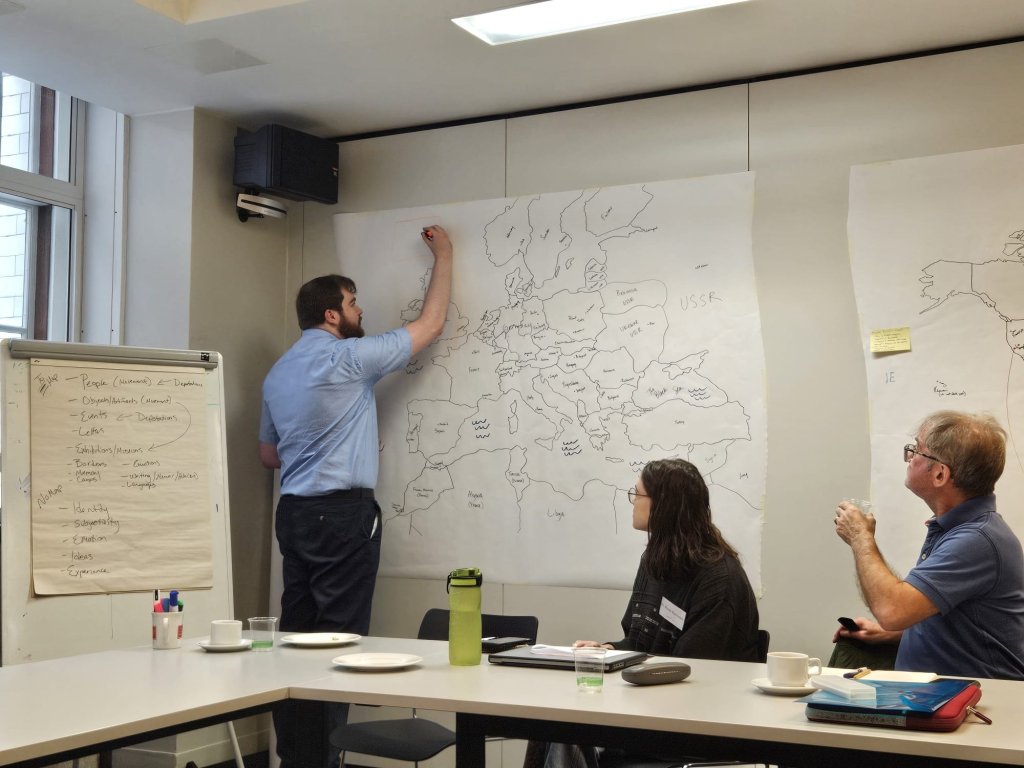
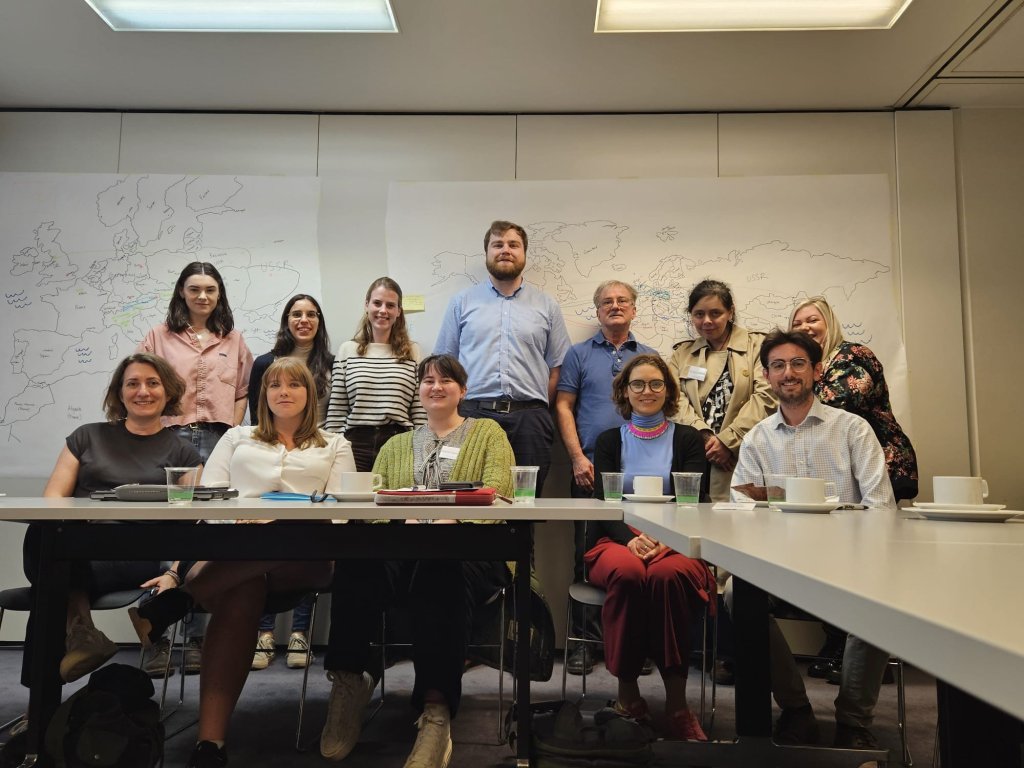
Mapping the Holocaust, Institute of Historical Research, University of London, 24 May 2024
In examining the routes taken by people, objects, and ideas during and after the Holocaust, this workshop highlights the connections and diversions (geographically, temporally, topically, etc.) when attempting to ‘map the Holocaust’.
This workshop asks participants to challenge how they conceptually view their own work and how historiography has understood the physicality and mapping of the Holocaust. Moving beyond transit routes and migration, this workshop considers both empirical and theoretical approaches to mapping
Funded by the Institute of Historical Research, the Social History Society, and the University of Manchester.
Selected papers from this workshop are currently in review for a special issue of The Journal of Holocaust Research.
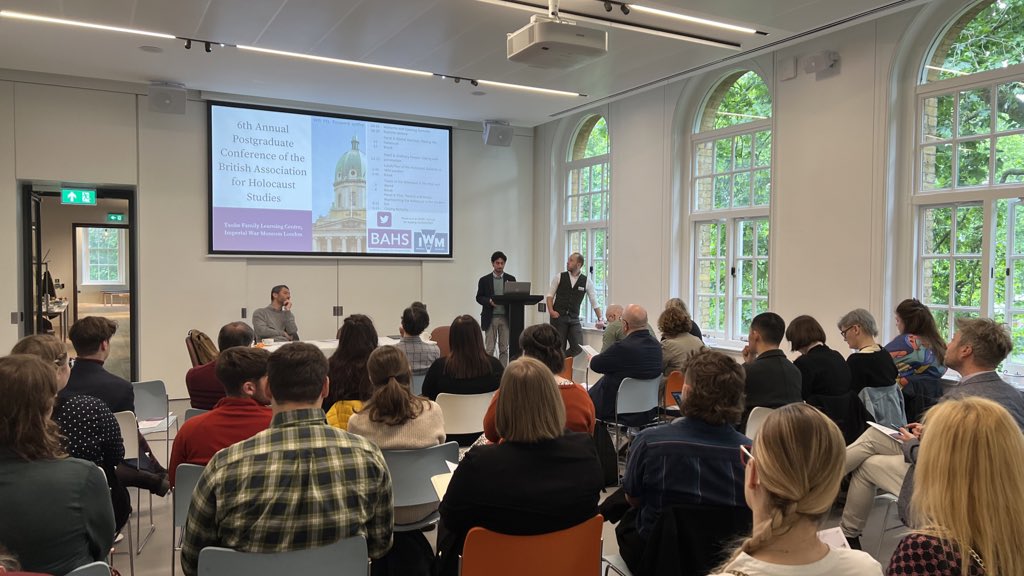
British and Irish Association for Holocaust Studies Postgraduate Conference, Imperial War Museum, London, May 2022
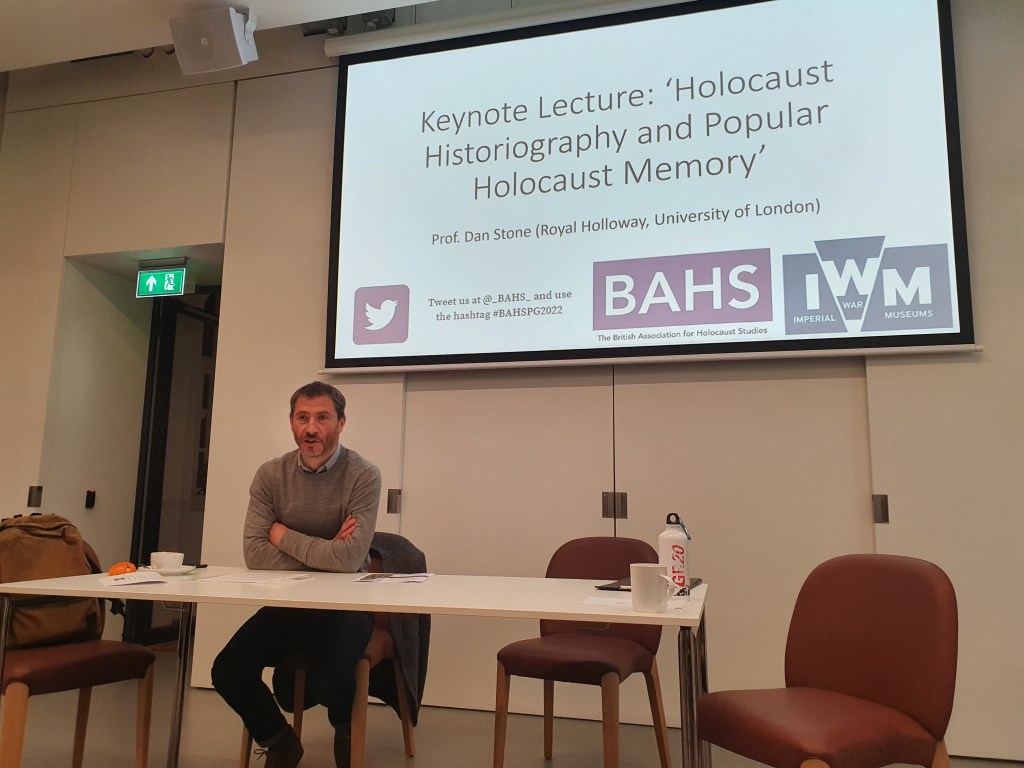
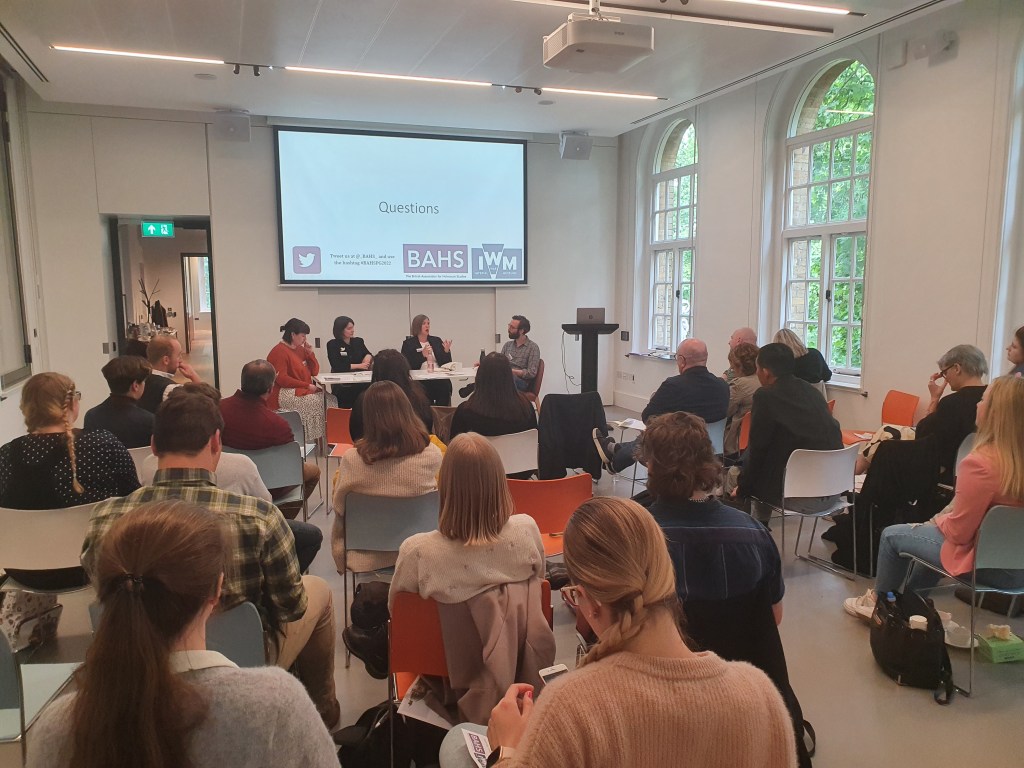
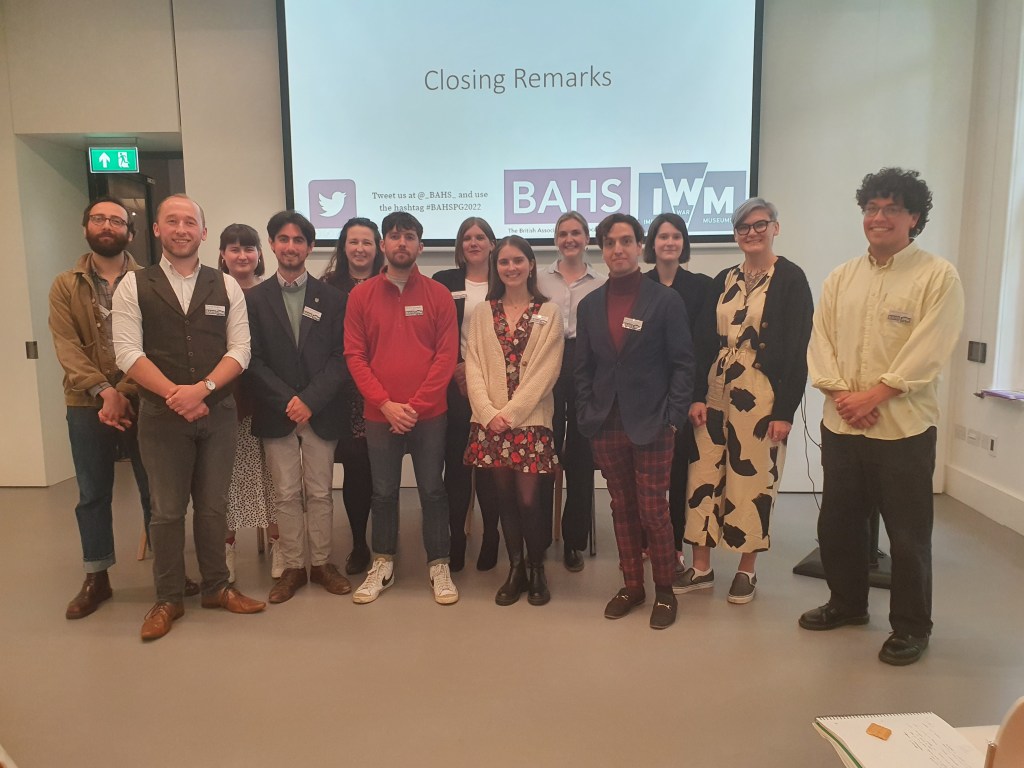
On Monday 30th May 2022, we welcomed 40 postgraduate researchers, educators, and academics to the Taube Family Learning Centre at the Imperial War Museum London for the BAHS Postgraduate conference 2022. Each year, the conference brings together a range of academics from across the UK and abroad with a wide range of expertise and interests. This year’s conference was no exception, providing an opportunity to expand the academic opportunities and resources available to postgraduates in our network. In the day-long conference, we heard a keynote from Professor Dan Stone, 11 papers featuring cutting-edge research from postgraduates from across the world, and took part in a tour of the new Holocaust galleries at the IWM.
Funded by the British and Irish Association for Holocaust Studies.
This conference resulted in a special issue of Holocaust Studies: A Journal of Culture and History.
Barnabas Balint and Charlie Knight, ‘Transnational Holocaust studies in history and memory’, Holocaust Studies: A Journal of Culture and History (2024).
Read more about the conference on the BIAHS website, below.
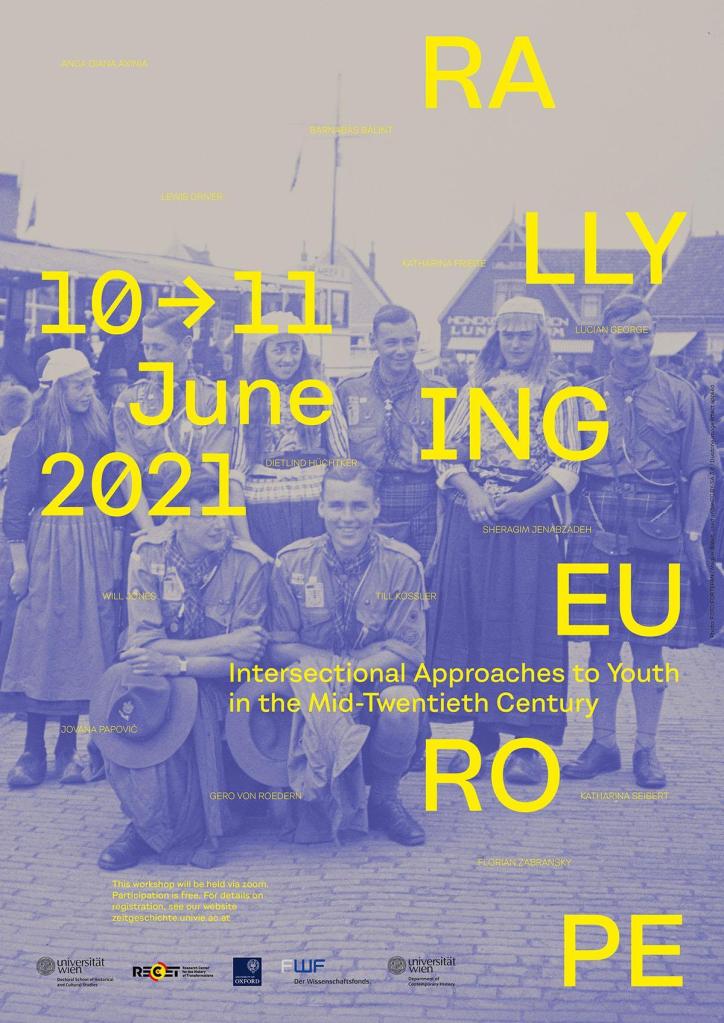
Rallying Europe: Intersectional Approaches to Youth and Gender in Mid-20th Century Europe, University of Oxford and University of Vienna, Online, July 2021
This workshop approaches the interwar and Second World War period by looking through the lens of age and gender. In doing so, we reveal how adult perceptions of youth and gender framed young men and women’s lives and their roles in society. Furthermore, we explore how these perceptions collided with youth agency, probing the specific age- and gender-related dynamics of empowerment and organization. From the International Brigades of the Spanish Civil War to the Hitler Youth to the Jewish Youth Movements in the Warsaw Ghetto Uprising, the turmoil of the mid-twentieth century saw young people of all political, ideological or social affiliations rallying for action across Europe.
Funded by the University of Vienna, the Doctoral School of Historical and Cultural Studies, the Research Center for the History of Transformations, and the University of Oxford’s Centre for European History.
This workshop resulted in a special issue of the European Review of History and an edited volume published by Routledge.
Katharina Siebert and Barnabas Balint, ‘Rallying Europe: young women and men searching for a life and a future’, European Review of History/Revue Européenne d’histoire, 31(3), 331–348.
Katharina Siebert and Barnabas Balint, Rallying Europe: Intersectional Approaches to Youth and Gender in the Mid-Twentieth Century (Abingdon: Routledge, 2026).
 Dr Barnabas Balint